


Le débat entre bandes de résistance vs poids est allé au-delà de l’opinion personnelle et s’est tourné vers la science de l’exercice. Des dizaines d'études montrent désormais que pour la grande majorité des objectifs d'entraînement, les bandes ne constituent pas un compromis : elles constituent une alternative légitime et fondée sur des preuves aux haltères et aux haltères. Mais sachant quelle bande de résistance dois-je acheter , comment sélectionner la force appropriée et quel type correspond à vos entraînements peut sembler déroutant lorsque vous vous tenez devant un support de boucles colorées et de tubes manipulés. Cet article clarifiera les vraies différences entre bande de résistance vs entraînement avec haltères , détaille les types d'élastiques disponibles et fournit un guide pratique pour démarrer une routine corporelle complète qui développe les muscles, brûle des calories et protège vos articulations.
Bandes de résistance vs poids et haltères : la comparaison scientifique
Quand les gens demandent bandes de résistance contre les poids , ils signifient généralement « les groupes sont-ils aussi efficaces que les haltères et les haltères ? La réponse courte est que pour l’activation musculaire, le gain de force et l’hypertrophie, les bandes peuvent correspondre aux poids libres – à condition que le niveau d’effort soit égal. Une étude de 2019 publiée dans le Journal of Human Kinetics a demandé aux participants d'effectuer une presse pectorale et une presse épaule avec des bandes et des haltères. Les données d'électromyographie (EMG) n'ont révélé aucune différence statistiquement significative dans l'activation musculaire maximale des pectoraux, des deltoïdes ou des triceps entre les deux modalités.
La principale différence réside dans la courbe de résistance. Un bande de résistance vs entraînement avec haltères la comparaison révèle que les haltères offrent une charge constante tout au long du mouvement, régie par la gravité. Les bandes offrent une résistance ascendante : la charge est la plus légère au début et la plus lourde au point de contraction complète. Ce profil profite en fait aux exercices tels que les élévations latérales, les vols thoraciques et les extensions de jambes, où le muscle est naturellement plus fort en position contractée. Cependant, pour les mouvements comme les squats et les soulevés de terre, les bandes à elles seules peuvent ne pas fournir suffisamment de charge en bas, c'est pourquoi les haltérophiles avancés ajoutent souvent des bandes à une barre pour créer une résistance accommodante.
D'un point de vue pratique, les avantages des bandes incluent le coût, la portabilité et la convivialité. Un ensemble complet de bandes couvrant une plage de résistance équivalente à un Ensemble d'haltères de 5 à 90 kg (10 à 200 lb) peut coûter aussi peu que 50 $ à 100 $ , alors que les haltères équivalents seraient un 500 $ à 1 500 $ investissement et occupent une surface au sol importante. Les bandes éliminent également la charge de compression sur la colonne vertébrale qui se produit lors des squats lourds avec haltères et des presses aériennes, ce qui les rend adaptées aux personnes souffrant de problèmes de dos. La principale limitation des bandes seules est l’incapacité de calibrer avec précision de très petits incréments de charge et le fait que la résistance n’est pas constante – mais pour la force générale et le développement musculaire, ce sont des inconvénients mineurs.
Quelle bande de résistance dois-je acheter ? Un guide d'achat adapté aux débutants
Si vous êtes nouveau dans la formation et que vous vous demandez les bandes de résistance sont-elles bonnes pour les débutants , la réponse est un oui catégorique. Les groupes pardonnent, ils enseignent un bon contrôle et réduisent le facteur d’intimidation d’un gymnase. La question quelle bande de résistance dois-je acheter La meilleure réponse est d'identifier votre style d'entraînement principal, puis de faire correspondre le type de bracelet à ce style.
Pour comprendre comment choisir la force d'une bande de résistance , commencez par tester. La plupart des fabricants proposent des ensembles de trois à cinq bandes à résistance progressive, généralement codées par couleur allant de très léger (2 à 5 kg) à très lourd (25 à 45 kg). Une approche judicieuse consiste à acheter un ensemble comprenant un groupe léger, moyen et lourd. Vous pouvez ensuite combiner des bandes pour créer des résistances intermédiaires. Quand vous pouvez jouer confortablement 12 à 15 répétitions d'un exercice en bonne forme, il est temps de passer à un groupe plus lourd. Le tableau ci-dessous résume les sélections de bandes recommandées en fonction de l'expérience de formation.
| Niveau utilisateur | Ensemble de bandes recommandé | Plage de résistance totale | Quoi prioriser |
|---|---|---|---|
| Débutant absolu | Lot de 3 : extra léger, léger, moyen | 2 à 15 kg (5 à 35 livres) | Forme, confiance et cohérence |
| Fitness général / entraînement à domicile | Lot de 4 : léger, moyen, lourd, extra lourd | 5 à 45 kg (10 à 100 lb) | Surcharge progressive de tout le corps |
| Haltérophile expérimenté (gym à domicile) | Ensemble de 5 comprenant des bandes de niveau professionnel | 5 à 90 kg (10 à 200 lb) | Résistance maximale pour les ascenseurs composés |
Pour la plupart des gens, le meilleures bandes de résistance pour les entraînements à domicile sont des bandes à boucles lourdes de 41 pouces (104 cm) fabriquées à partir de couches de latex. Ils sont suffisamment polyvalents pour les tractions, les squats et les presses ancrées. Si votre routine se concentre sur des exercices du haut du corps qui imitent les mouvements d'haltères, un ensemble de bandes tubulaires avec poignées vous semblera plus familier et permettra une prise confortable. Le point essentiel est de vérifier la résistance déclarée de la bande à 100 % d'allongement et de s'assurer qu'elle correspond à votre niveau de résistance actuel : une bande trop légère ne permettra pas l'adaptation, tandis qu'une bande trop lourde forme des compromis.
Quels sont les différents types de bandes de résistance ?
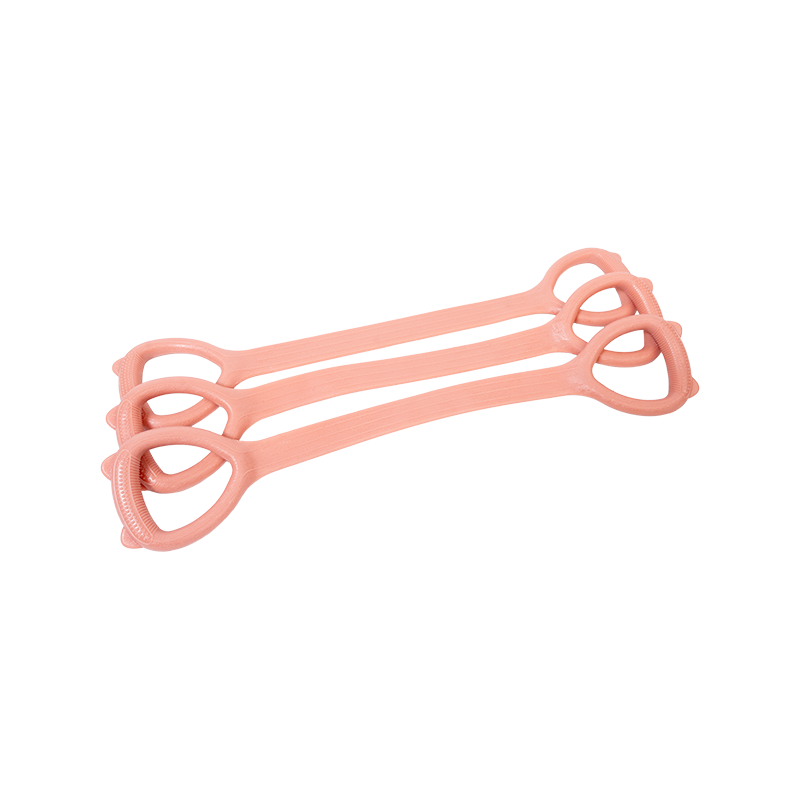
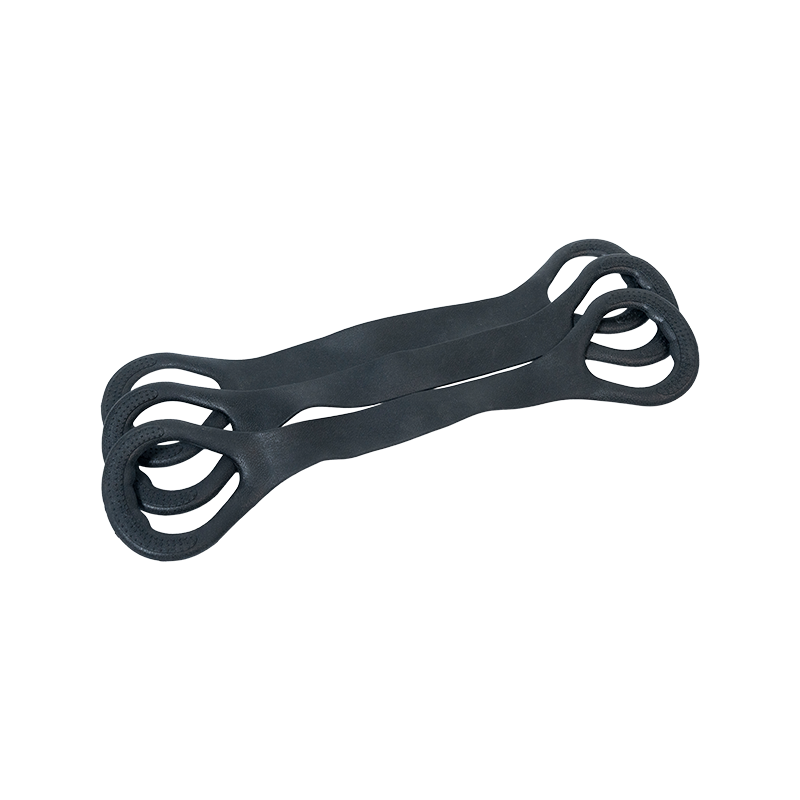
Compréhension quels sont les différents types de bandes de résistance évite la frustration liée à l'utilisation du mauvais outil pour un exercice donné. Les trois formes les plus courantes sont les bandes à boucles, les bandes tubulaires avec poignées et les bandes en tissu, chacune étant conçue à des fins spécifiques. La comparaison entre bandes à boucles vs bandes de résistance à tube est particulièrement important : les bandes à boucles sont des cercles élastiques continus, idéales pour le travail du bas du corps et les tractions assistées, tandis que les bandes tubulaires se terminent par des poignées et sont mieux adaptées aux mouvements de pression et de curling qui imitent les haltères.
Le choix entre bandes de résistance en tissu vs bandes de résistance en latex se résume au confort et à la durabilité par rapport à la polyvalence. Les bandes de tissu, souvent constituées de mélanges coton-élasthanne avec une bande intérieure antidérapante, sont principalement conçues pour l'activation des fessiers et les exercices des hanches. Ils n'enroulent pas les cuisses lors des squats ou des marches latérales, ce que les mini-bandes en latex ont tendance à faire. Les bandes à boucles en latex, quant à elles, offrent une plus grande gamme de résistances et peuvent être utilisées pour des centaines d’exercices. Le tableau ci-dessous détaille les caractéristiques de chaque type.
| Type de bande | Matériel | Plage de résistance (par bande) | Meilleurs exercices | Caractéristique clé |
|---|---|---|---|---|
| Bande à boucle en latex (41 pouces) | Latex naturel | 2 à 90 kg (5 à 200 lb) | Tractions, squats, soulevés de terre, développé couché | Le plus polyvalent ; peut être étranglé ou ancré |
| Bande de tube avec poignées | Tube en caoutchouc avec poignées en plastique | 5 à 25 kg (10 à 55 lb) | Boucles, rangées, presse à épaules, presse pectorale | Imite les exercices d'haltères ; prise en main confortable |
| Bande de hanche en tissu | Coton‑élasthanne avec grip en caoutchouc | 5 à 20 kg (10 à 45 lb) | Ponts fessiers, marches latérales, coquilles | Antidérapant, ne roule pas, lavable en machine |
Une salle de sport à domicile bien équipée comprend généralement au moins un jeu de bandes à boucles lourdes et un jeu de mini-bandes ou de bandes en tissu pour les travaux d'isolation. Les bandes tubulaires sont facultatives mais très pratiques pour ceux qui préfèrent une poignée basée sur une poignée. Inspectez régulièrement les bandes de latex pour détecter de petites déchirures et saupoudrez-les de talc pour éviter qu'elles ne se dessèchent. Un ensemble de bandes de latex superposées de qualité peut durer 2 à 4 ans avec une utilisation constante avant de perdre une tension significative.
Exercices de bandes de résistance pour un entraînement complet du corps
Un complet exercice avec bande de résistance pour un entraînement complet du corps la séance peut être effectuée n'importe où et ne nécessite qu'un seul jeu de bandes et un point d'ancrage sécurisé comme une porte ou un poteau. La routine suivante touche tous les principaux groupes musculaires et peut être ajustée à n’importe quel niveau de forme physique en modifiant l’épaisseur de la bande.
- Squat de gobelet à bandes : Tenez-vous debout sur une lourde bande à boucles, saisissez l’autre extrémité à hauteur de poitrine et accroupissez-vous. Cela construit les quadriceps et les fessiers avec une tension constante tout au long de l'ascension. Effectuer 3 séries de 12 à 15 répétitions .
- Rangée courbée : Tenez-vous debout sur la bande avec les pieds à la largeur des hanches, penchez-vous vers l'avant et tirez la bande vers votre nombril. Cela cible les dorsaux, les rhomboïdes et les biceps. 3 séries de 10 à 12 répétitions .
- Presse pectorale ancrée : Fixez la bande derrière vous à hauteur de poitrine à travers un ancrage de porte, puis poussez les deux poignées vers l'avant. Celui-ci recrute les pectoraux et les triceps avec un profil de résistance ascendant. 3 séries de 10 à 12 répétitions .
- Presse aérienne : Tenez-vous sur la bande et appuyez directement au-dessus de votre tête, en gardant le noyau renforcé. Ce mouvement met à l’épreuve la stabilité et la force des épaules. 3 séries de 10 à 12 répétitions .
- Soulevé de terre en bandes : Tenez-vous debout sur une bande très lourde avec les pieds à la largeur des épaules, accroupissez-vous pour saisir la bande et relevez-vous en passant par les hanches. Cela renforce les ischio-jambiers, les fessiers et le bas du dos. 3 séries de 8 à 10 répétitions .
- Presse Pallof : Ancrez la bande à la hauteur du torse, placez-vous de côté par rapport à l'ancre et appuyez sur la bande tout droit devant vous, en résistant à la traction rotationnelle. Il s’agit d’un puissant exercice de base anti-rotation. 3 séries de 10 à 12 répétitions per side .
Cet entraînement dure environ 25 à 35 minutes et peut être effectué trois fois par semaine. Au fur et à mesure que vous devenez plus fort, augmentez la résistance en utilisant une bande plus épaisse ou en doublant deux bandes. Pour souligner l'hypertrophie, ajoutez un Pause de 2 secondes au pic de contraction sur chaque exercice et contrôler la phase de retour pour 3 à 4 secondes . Les recherches sont cohérentes : l’entraînement complet du corps avec une bande, lorsqu’il est effectué avec une intensité suffisante, produit des gains mesurables en termes de taille musculaire, de force et de forme cardiovasculaire. Que vous soyez un débutant commençant une salle de gym à domicile ou un haltérophile expérimenté à la recherche d'un complément respectueux des articulations au travail intense avec des haltères, un ensemble de bandes de résistance de qualité est l'un des investissements les plus efficaces et les plus abordables pour votre santé à long terme.